
Boost Skin Health Through a Balanced Gut Microbiome
The key to skin health is gut health, and key to gut health is a healthy microbiome. All good skin routines start with a biome.
Introduction
The human microbiome is the collection of microbes - bacteria, fungi, viruses and protozoa - that colonise different sites of the body. Both the gut and the skin have well established and specific microbiomes, essential for health.
The gut microbiome is the largest with an estimated 1,014 microbial cells, and has the highest diversity of microbes. It is key to gut health, systemic health and skin health. In fact, the impact of the gut microbiome is so significant, that it has been considered an ‘essential organ’ (1,2).
Microbes produce numerous compounds which are required for healthy metabolic, immune, neurologic and endocrine function. These include essential nutrients such as vitamin K and B12, hormones and hormone-like substances, endocannabinoids, as well as neurotransmitters such as gamma-aminobutyric acid (GABA), serotonin, dopamine, tryptophan, noradrenaline, acetylcholine and histamine. Microbes also ferment indigestible complex polysaccharides to produce short chain fatty acids (SCFA) such as butyrate, acetate and propionate (1,3,4,5).
These compounds improve digestion and maintain the health and integrity of the intestinal barrier (5). They are also able to cross the intestinal barrier and enter the blood stream, regulating numerous physiological pathways and impacting systemic health including affecting brain and skin (1,3,4,5).
Gut brain axis
The gut microbiome talks to and controls the central nervous system (CNS). It does this through the vagus nerve and substances made by microbes. This connection is called the 'gut-brain axis.'
This ‘gut–brain axis’ is now thought to contribute to the regulation of a multitude of metabolic, immune, endocrine and nervous system processes (3).
Gut skin axis
The gut microbiome also impacts the health of the skin – the ‘gut-skin axis’. Many studies have shown a strong bidirectional link between gastrointestinal and skin health. This is largely through modification of the immune system. Researchers have gone further to propose that the gut-skin axis is also directly affected by the brain and should be referred to as the gut-brain-skin axis (1,3).
Effects of dysbiosis
Gut microbial dysbiosis (imbalance in microbial composition) has been associated with a range of medical conditions including irritable bowel syndrome, colorectal cancer, obesity and related disorders and neurological disorders such as anxiety, chronic pain, Parkinson’s disease and Alzheimer’s Disease, amongst numerous other conditions (4,7).
It also has a negative impact on skin function and integrity, and has been linked to numerous skin conditions, in particular conditions related to inflammation. This includes inflammatory diseases such as acne, atopic dermatitis, psoriasis and rosacea amongst others, as well as skin cancer, poor wound healing and accelerating ageing (1,5).
Intestinal dysbiosis results in the secretion of pro-inflammatory cytokines leading to chronic systemic inflammation and an abnormal immune response that disrupts skin health (4,5,8,).
Ensuring optimal bacterial balance in the gut is key to regulating the immune system and managing inflammation (5,9).
Probiotics
Probiotics are defined by the World Health Organisation as living microorganisms that confer a health benefit when administered in adequate amounts. The use of probiotics leads to improvement and stabilisation of the gut microbiome , improvement in gut barrier function as well as regulating the mucosal and systemic immune systems and having an anti-inflammatory effect (9,10,11).
Postbiotics are defined as a “preparation of inanimate microorganisms and/or their components that confers a health benefit on the host”. Effective postbiotics must contain inactivated microbial cells or cell components, with or without metabolites, that contribute to observed health benefits. This includes heat-killed (tyndallized) bacteria (12).
Pro- and postbiotics have been shown to lead to improvements in numerous medical conditions including gastrointestinal disease, type 2 diabetes mellitus, obesity and related conditions, infections, anxiety and depression (13,14).
They have also been shown to help with skin health. They can improve acne and atopic dermatitis. They may also help reduce general skin inflammation.
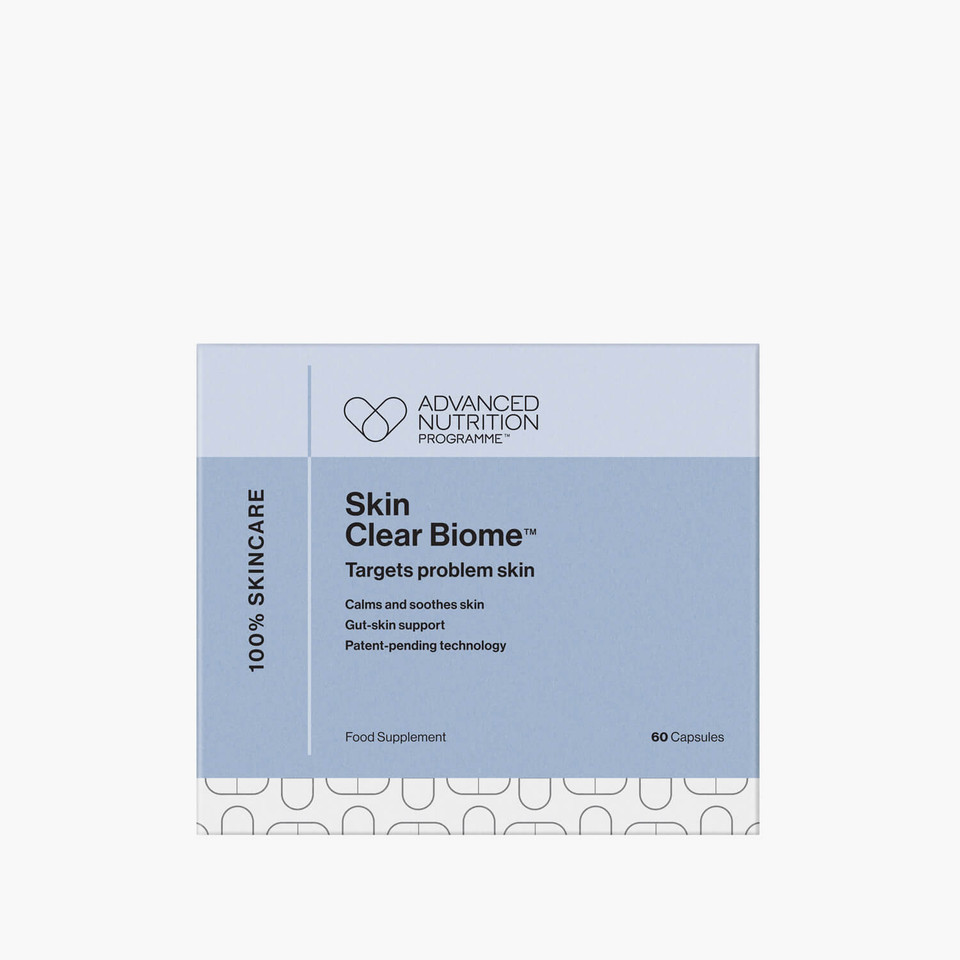
Skin Clear Biome™ was formulated to target acne-prone skin, utilising probiotic strains selected for their anti-inflammatory properties and their ability to modulate key factors contributing to acne pathogenesis.
Lactobacillus paracasei has been shown to have a calming effect on the gut-brain axis, thereby reducing stress (15).
It can also help the skin by boosting the production of ceramides and other fats that keep the skin healthy. It can support the immune system, lower oxidative stress, and reduce inflammation caused by substance P.
Lactobacillus helveticus, Lactobacillus paracasei, Bifidobacterium bifido have been shown to improve immune function and exert an anti-inflammatory effect. Levels of Lactobacillus and Bifidobacterium species have been observed to be reduced in individuals with acne.
Saccharomyces boulardii helps strengthen the intestinal barrier, reducing gut permeability. It also enhances the mucosal immune response and secretory IgG intestinal levels and reduce inflammatory cytokines involved in acne (19).
All strains promote a healthy gut microbiome (19, 20, 21).
Testimonials
I noticed some improvements in the way that my skin felt and looked during the first 4 weeks of using the product. I had fewer spots on my face and the red bumps/spots on my chest and neck area seemed to fade a bit. In the last 4 weeks of using the product the skin on my face started to feel much smoother. I had considerably fewer spots on my face and my chest and neck are almost entirely spot-free. Laura S (29)
I have had such a good experience with the product. My skin has cleared up a lot, from the oiliness of my skin to the number of breakouts I have had, has massively decreased. Also, the healing time, if I did get a breakout, they would dry out and clear up a lot quicker than normal. Kate M (19)
When first using the product, I experienced breakouts, and I was unsure if it was working. After the second assessment session, it kicked in and slowly started to clear up my skin and the spots were less sore. My face also became less oily. Leah P (21)
During the 8 weeks, I noticed a difference in redness and inflammation around my spots and they weren’t as sore as normal. I also experienced less bloating and cramps while I was taking this product. Sharon I (40)
I noticed clearer skin, fewer monthly breakouts, and faster healing of blemishes. My digestion has also been a lot better, and I noticed a significant reduction in craving for sugar. My complexion is also a lot brighter. Candice F (29)
I am overwhelmed with the results, it has exceeded my expectations. I will be lost without the product, it has really boosted my confidence, lots of people have noticed, and over the last 8 weeks I have made more progress on my skin than I have in 7 years. It’s been completely life-changing.. Charlotte L (22)
I found the product overall good, I felt that my problem such as oily skin and blemishes hugely improved. My skin felt more radiant, and the overall quality was improved by the products. Jassynta N (23)
References
- Pessemier, B. de, et al. (2021). Gut–skin axis: Current knowledge of the interrelationship between microbial dysbiosis and skin conditions. In Microorganisms (Vol. 9, Issue 2, pp. 1–33). MDPI AG.
- Ding, R. et al. (2019). Revisit gut microbiota and its impact on human health and disease. In Journal of Food and Drug Analysis (Vol. 27, Issue 3, pp. 623–631). Elsevier Taiwan LLC.
- Arck, P., et al. (2010). Is there a “gut-brain-skin axis”? In Experimental Dermatology (Vol. 19, Issue 5, pp. 401–405).
- de Vos, W. M., et al. (2022). Gut microbiome and health: mechanistic insights. Gut, 71(5), 1020–1032.
- Chen, G., et al. (2021). Gut–Brain–Skin Axis in Psoriasis: A Review. In Dermatology and Therapy (Vol. 11, Issue 1, pp. 25–38). Adis.
- Dicks, L. M. T. (2022). Gut Bacteria and Neurotransmitters. In Microorganisms (Vol. 10, Issue 9). MDPI.
- Chen, Y., Zhou, J., & Wang, L. (2021). Role and Mechanism of Gut Microbiota in Human Disease. In Frontiers in Cellular and Infection Microbiology (Vol. 11). Frontiers Media S.A.
- Teng, Y., et al. (2022). The Role of Probiotics in Skin Photoaging and Related Mechanisms: A Review. In Clinical, Cosmetic and Investigational Dermatology (Vol. 15, pp. 2455–2464). Dove Medical Press Ltd.
- Cristofori, F., et al. (2021). Anti-Inflammatory and Immunomodulatory Effects of Probiotics in Gut Inflammation: A Door to the Body. In Frontiers in Immunology (Vol. 12). Frontiers Media S.A.
- Food and Agriculture Organization and World Health Organization Expert Consultation (2001). Evaluation of health and nutritional properties of powder milk and live lactic acid bacteria. Córdoba, Argentina: Food and Agriculture Organization of the United Nations and World Health Organization.
- Polak, K., et al. (2021). Microbiome modulation as a therapeutic approach in chronic skin diseases. In Biomedicines (Vol. 9, Issue 10). MDPI.
- Salminen, S., et al. (2021). The International Scientific Association of Probiotics and Prebiotics (ISAPP) consensus statement on the definition and scope of postbiotics. In Nature Reviews Gastroenterology and Hepatology (Vol. 18, Issue 9, pp. 649–667). Nature Research.
- Maftei, N. M., et al. (2024). The Potential Impact of Probiotics on Human Health: An Update on Their Health-Promoting Properties. In Microorganisms (Vol. 12, Issue 2). Multidisciplinary Digital Publishing Institute (MDPI).
- Ji, J., et al. (2023). Probiotics, prebiotics, and postbiotics in health and disease. In MedComm (Vol. 4, Issue 6). John Wiley and Sons Inc.
- Patterson, E., et al. (2020). Lacticaseibacillus paracasei Lpc-37® improves psychological and physiological markers of stress and anxiety in healthy adults: a randomized, double-blind, placebo-controlled and parallel clinical trial (the Sisu study). Neurobiology of Stress,
- Gueniche A, et al (2014). Randomised double-blind placebo-controlled study of the effect of Lactobacillus paracasei NCC 2461 on skin reactivity. Beneficial Microbes. Jun 1;5(2):137-45.
- Mourelle, M. L., et al. (2024). Role of Nutribiotics in Skin Care. In Applied Sciences (Switzerland) (Vol. 14, Issue 8). Multidisciplinary Digital Publishing Institute (MDPI).
- Dapkevicius, I., et al. (2023). Acne Vulgaris Topical Therapies: Application of Probiotics as a New Prevention Strategy. In Cosmetics (Vol. 10, Issue 3). MDPI.
- Kelesidis, T., & Pothoulakis, C. (2012). Efficacy and safety of the probiotic Saccharomyces boulardii for the prevention and therapy of gastrointestinal disorders. Therapeutic Advances in Gastroenterology, 5(2), 111–125.
- Hemarajata, P., & Versalovic, J. (2013). Effects of probiotics on gut microbiota: Mechanisms of intestinal immunomodulation and neuromodulation. In Therapeutic Advances in Gastroenterology (Vol. 6, Issue 1, pp. 39–51).
- Latif, A., et al. (2023). Probiotics: mechanism of action, health benefits and their application in food industries. In Frontiers in Microbiology (Vol. 14). Frontiers Media SA.